
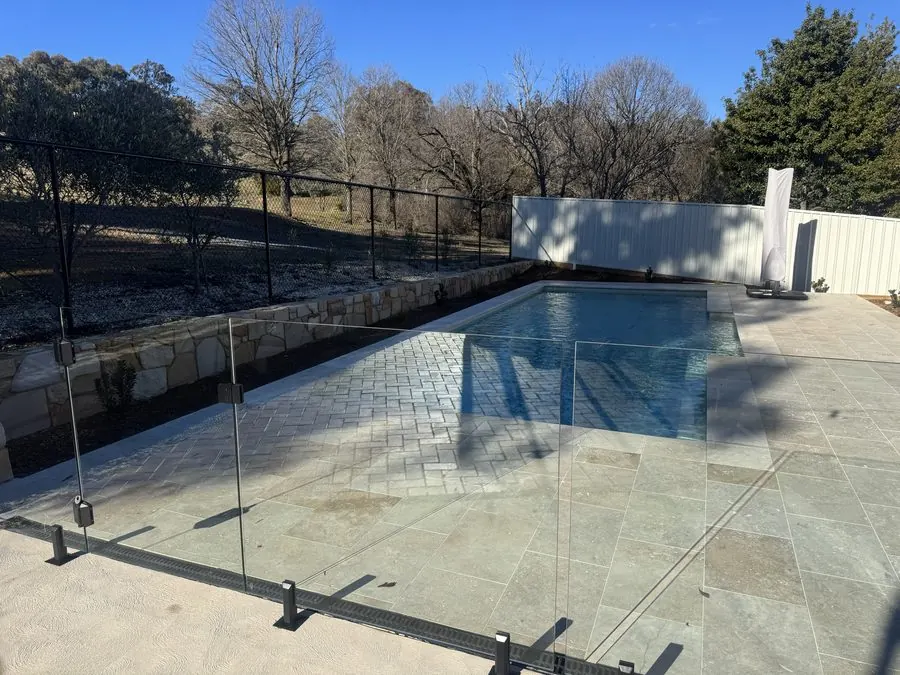
ACT pool compliance, fully explained
32 questions covering the whole scheme: the rules, the deadlines, what gets measured, waivers, selling and leasing, and what it costs. Links to the official ACT Government pages throughout, so you can check any of it yourself.
The rules and the deadlines
Which pools do the ACT rules apply to?
Any home swimming pool that can hold water deeper than 300mm and is associated with a residential property: a house, unit, townhouse or apartment block. In-ground and above-ground, permanent and demountable, and wading and kids’ pools all count.
Hotel, motel and public pools are regulated separately and sit outside this scheme.
What am I already required to do, right now?
Since 1 May 2024, every ACT pool owner must keep the safety barrier maintained as an effective and safe child-resistant barrier, and keep all doors, gates and covers giving access to the pool securely closed whenever it is not in use. Both carry offence provisions, and both apply regardless of how old your pool is.
Disclosure obligations also already apply any time a property with a pool is sold or leased.
What happens on 1 May 2028?
From that date, every home pool in the ACT must have a safety barrier meeting the prescribed safety standards. Pools built, altered or installed before 1 May 2013 must obtain a compliance certificate before 1 May 2028 and lodge it with the ACT Government within 30 days of it being issued.
Certificates obtained during the transition period stay valid until 1 May 2032. Certificates issued from 1 May 2028 onwards are valid for five years.
What are the “prescribed safety standards”?
For pools built or altered before 1 May 2023, it is the current Building Code of Australia together with two Australian Standards: AS 1926.1–2012 (safety barriers for swimming pools) and AS 1926.2–2007 (location of safety barriers).
For pools built or altered after 1 May 2023, it is the Building Code and the standards it called up at the time of the work. You can read both standards free through the Standards Australia Reader Room.
My pool was built after May 2013. Do I still need a certificate?
Not by the 2028 deadline. Pools built, altered or installed from 1 May 2013 were already legally required to meet the safety standards when built, so nothing has to be lodged by 1 May 2028.
From that date though, you will need a compliance certificate, or a certificate of occupancy less than five years old covering the pool and barrier, whenever you sell or lease the property.
What happens if I miss the deadline?
The scheme has a compliance and enforcement framework behind it, and offence provisions already apply for failing to maintain a barrier and failing to keep gates and doors closed. A non-compliant pool also complicates any sale or lease, because disclosure obligations apply either way.
The practical answer is not to find out. Acting early leaves time to fix whatever turns up.
Where can I read the actual legislation?
The scheme was created by the Building (Swimming Pool Safety) Legislation Amendment Act 2023, which inserted the pool safety provisions into the Building Act 2004. The Ministerial Exemption Guidelines (DI2024–82) cover waivers. Both are free on the ACT Legislation Register.
What gets checked against the standards
What is the non-climbable zone?
The standard requires a 900mm-radius non-climbable arc struck from the top of the barrier, clear of anything a child could use to climb. Pot plants, BBQs, pool equipment, retaining walls, tree branches, horizontal rails, and in some configurations objects on the neighbour’s side.
There are four separate non-climbable zone requirements depending on the barrier setup, with different rules again where a boundary fence forms part of the barrier and where barrier sections intersect. It is the single most common reason a good-looking fence does not pass.
How high does the barrier have to be?
1200mm minimum, measured from finished ground level on the outside. If a boundary fence forms part of the barrier, it needs to be 1800mm.
The gap underneath cannot exceed 100mm at any point, and ground levels either side matter: garden build-up or new paving against a fence can quietly drop it below the required height.
What are the rules for gates?
Gates must swing outward away from the pool, self-close and self-latch from any position, and have a latch release either at least 1500mm above ground or shielded so a child cannot reach it. The latch must not be able to be adjusted or locked open.
Worn springs and latches that no longer catch reliably are among the most common failures I find, and among the cheapest to fix.
Can my boundary fence form part of the barrier?
Yes, if it meets the requirements, which generally means 1800mm high measured from the pool side with a compliant non-climbable zone on that side.
If a shared boundary fence needs upgrading, the ACT Government’s guidance is to agree the work and the cost split with your neighbour first. If you cannot agree, either party can apply to ACAT for a determination under the Common Boundaries Act.
What about windows, doors and balconies?
Windows opening into the pool area with a sill less than 1800mm above the floor must be covered by bars or a screen, fixed shut, or restricted to open no more than 100mm.
A door generally cannot form part of an outdoor pool barrier, so the wall of a house with a back door in it cannot be used as barrier for an outdoor pool. Balcony balustrades protruding into the non-climbable zone must comply with the zone requirements too.
What about inflatable, temporary and above-ground pools?
A purely inflatable pool with no frame and no filtration system is not covered. If it has a frame or a filtration system, it is a demountable pool and the rules apply, though there is an exemption for demountable pools in place no more than three consecutive days.
Above-ground pool walls can act as the barrier if they are factory-fabricated, at least 1200mm high measured from the outside, and non-climbable, with a barrier around any permanent ladder or access point.
What are the most common failure points?
Climbable objects inside the non-climbable zone. Gate latches and springs that no longer self-latch. Gaps over 100mm under or between panels. Barrier height reduced by garden build-up or new paving. Vegetation grown against the fence.
Nearly all of them are inexpensive to fix if you find them early.
Older pools and what applied when yours was built
My pool is decades old. What did it have to meet back then?
Far less. A pool built between 1972 and 1979 only needed a fence of 3 feet 6 inches (1.07m) with no climbability rules at all. Pools from 1980 onward needed only a basic urban dividing fence, and the barrier requirement applied only to outdoor pools.
Each later era added more. The ACT Government publishes factsheets comparing what applied when your pool was built against what the 2028 standards require. They are on the reforms page, and they are the best preview of what an inspection is likely to find.
How do I find out how old my pool is?
You can request a building file search from Access Canberra, which may hold records if a certificate of occupancy was issued or the pool was previously inspected. A pool installer or SPASA member can often advise as well.
During the transition period, sellers are only expected to disclose what is reasonably within their knowledge. If you genuinely cannot establish the date, treat the pool as pre-2013 and plan accordingly.
My pool was never signed off. What do I do?
That is a different problem to a barrier that needs work, and a more serious one, because the building work itself was never lawfully completed. It usually surfaces during a sale when a conveyancer asks for the certificate of occupancy.
It is fixable retrospectively, and I manage that process end to end. See unapproved pools and retrospective approval.
Waivers and exemptions
What is a waiver, and when can I get one?
A waiver, formally a Ministerial exemption, excuses a pool from all or part of the safety standards where a compliant barrier cannot reasonably be achieved. The accepted grounds are: the pool area physically cannot accommodate a compliant barrier; compliance would likely require removal of a protected tree; it would significantly affect the heritage significance of a registered place; it would prevent a person with a disability accessing the pool; or there are documented plans to remove the pool within 24 months.
Which grounds are available depends on when the pool was built. The full criteria are in the Ministerial Exemption Guidelines.
How do I apply for a waiver?
Read the official guidelines to confirm your ground applies, complete the application form from the ACT Government reforms page, and attach supporting evidence. Incomplete applications are not considered, so photographs, site plans and arborist or heritage documentation matter.
All waiver applications are assessed and granted by the ACT Government, not by inspectors. An exemption certificate lasts a maximum of five years and can be used for disclosure when selling or leasing. It is worth having the pool inspected first, because knowing precisely which requirement your site cannot meet is what an application turns on.
What is a standing exemption?
Separate from Ministerial waivers, the legislation prescribes circumstances where a pool is automatically exempt without applying. A demountable pool in place for no more than three consecutive days is one.
The detail sits in the legislation itself.
Can I just remove the pool instead?
Yes, and documented plans to remove it within 24 months are themselves a ground for a waiver in the meantime. Once a pool is permanently decommissioned so it can no longer hold more than 300mm of water, it is no longer a regulated swimming pool.
Demolition may involve its own approvals, so check with Access Canberra before starting work.
Selling or leasing
What do I have to disclose when selling?
Until 1 May 2028, anyone selling a property with a regulated pool must provide the ACT Government’s pool owners guidance material, plus at least one of: a swimming pool disclosure statement; a certificate of occupancy covering the pool and barrier less than five years old; a compliance certificate; or a Ministerial exemption certificate.
The ACT Government’s guide to disclosure obligations during the transition period sets out exactly what is required.
Do the rules apply to rental properties?
Yes. Owners of leased properties carry the same barrier maintenance obligations, and disclosure requirements apply when leasing a property with a pool. Tenants share the day-to-day obligation to keep gates, doors and covers securely closed whenever the pool is not in use.
Practically, a gate that has stopped self-latching is a maintenance issue to fix when reported, not at the next lease turnover.
Certificate or disclosure statement? Which do I need?
A disclosure statement is a transaction document. It records the age of the pool and its status against the standard, so a buyer or tenant knows what they are taking on, and it satisfies your disclosure obligation until 30 April 2028.
What it does not do is certify the pool. If the pool was built before 1 May 2013, the compliance certificate is still required before 1 May 2028. Treat the disclosure statement as a bridge, not a destination. There is a full comparison in this guide.
I am mid-sale and just found out. What now?
Ring me before you tell the buyer anything. Not to conceal it, which you cannot and should not do, but because “there is an issue with the pool” and “there is an issue, here is the scope, here is the timeframe, here is who is handling it” produce very different negotiations.
I keep inspection slots free for settlement deadlines. Tell me the date when you call.
Inspections, certificates and lodgement
What happens during an inspection?
45 to 90 minutes on site for a typical suburban pool, longer if there are multiple barriers, retaining walls or more than one gate. I walk the whole barrier with you, measure the height, ground clearance, gaps, zones, gates, doors and windows, and tell you the result before I leave.
The written report follows within 24 hours, with each item referenced to the clause it comes from and a plain description of what would fix it, so you can hand it straight to a fencing contractor.
What happens if my barrier fails?
Very common, and not a penalty. You get a written notice identifying what does not comply and a period to rectify it. You fix the items, I come back and reinspect, and the certificate follows. Nothing starts from scratch.
A reinspection is $200 plus the $79 government lodgement fee, $279 all inclusive.
What is the $79 lodgement fee?
It is the ACT Government’s administration fee for lodging a certificate, not my charge. Every compliance certificate must be lodged within 30 days of being issued, and the fee is payable on lodgement.
I quote it inside the total rather than adding it at the end. A compliance status certificate is $479 all inclusive; a reinspection is $279 all inclusive. A disclosure statement is not lodged, so no fee applies and it stays at $400.
Where does the certificate get lodged?
With the ACT Government, within 30 days of issue, and for pre-May-2013 pools before the 1 May 2028 deadline. I handle the lodgement for you and give you a copy for your records.
Government services run through Access Canberra, and the reforms page is the authoritative source.
Do you cover NSW?
Yes. Queanbeyan, Jerrabomberra, Googong, Bungendore, Murrumbateman, Yass and the surrounding district. NSW runs under separate legislation, the Swimming Pools Act 1992, with its own register and its own certificate, valid three years from issue.
Details on the NSW inspections page.
How much notice do you need?
Usually a few days, and I keep slots free for settlement deadlines. If you have a date you have to hit, say so when you ring and I will work backwards from it.
Why act now rather than waiting until 2027?
Thousands of ACT pools need certification before May 2028, and many will need rectification work first: fencing, landscaping, gate hardware. The closer the deadline gets, the harder it becomes to book both inspectors and trades.
Acting now means no queue, time to fix anything properly, and a certificate that runs through to 2032 rather than five years from a later date.
Still not sure where your pool stands?
Ten minutes on the phone usually settles it. I will tell you whether you need a certificate now, a disclosure statement for a settlement, or nothing at all yet. No charge for that conversation.
Call 0456 676 683 Book an Inspection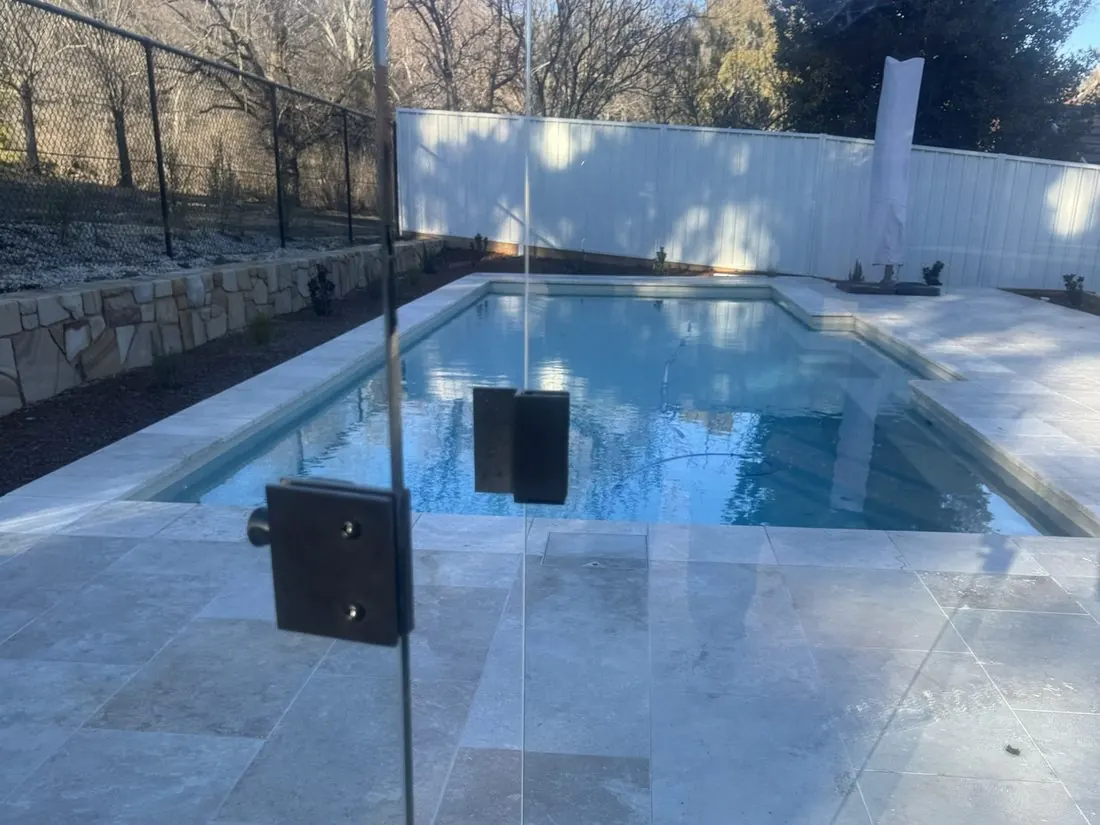
Compliance status certificate, $479 all inclusive
Inspection, certificate and lodgement with the ACT Government, quoted as one figure. Disclosure statements $400, reinspections $279.