
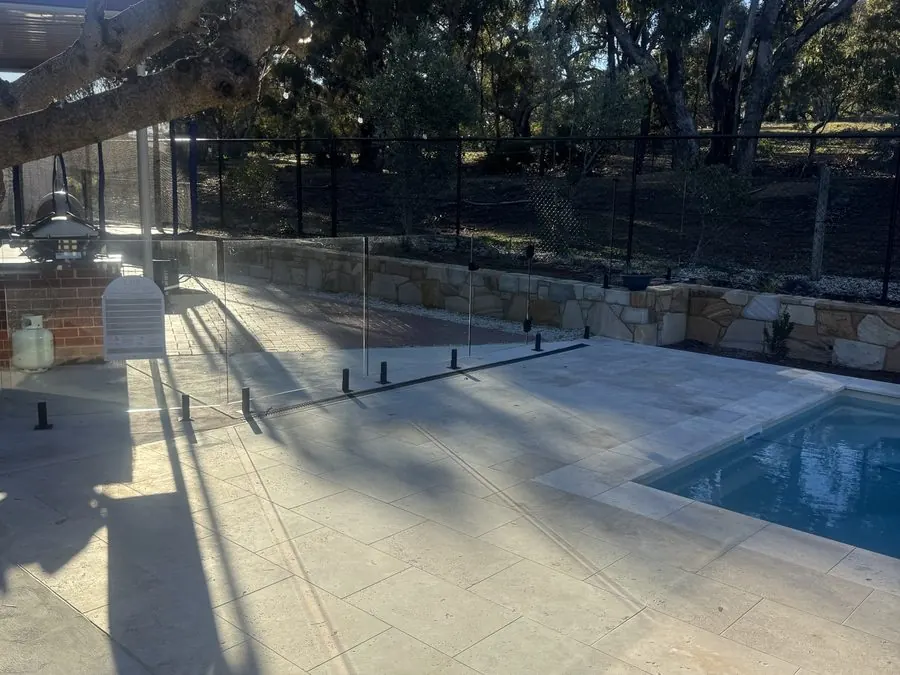
Unapproved pool in the ACT? We handle the whole retrospective approval.
The builder never finalised it. The final inspection never happened. Or the ACT Government has written to you. However you got here, a pool with no certificate of occupancy is unapproved, and that stops a sale in its tracks. I manage the entire fix as one package.
The problem
A pool that was never signed off is a pool that is not lawfully finished
Building work on a swimming pool in the ACT generally needs a building approval, inspections at defined stages, and a certificate of occupancy at the end. The certificate of occupancy is the document that says the work was completed and approved. Plenty of Canberra pools never got one.
The reasons are almost always mundane rather than sinister:
- The builder walked away. The pool was finished, the final payment was taken, and the paperwork was never closed out. This is by far the most common cause.
- An inspection was missed. A required inspection was skipped, so the file could never be finalised — even though the pool itself is perfectly sound.
- There was never an approval. The pool went in without a building approval at all, sometimes decades ago, sometimes under a previous owner.
- The electrical was never certified. Pool electrical work that was never signed off will hold up a certificate of occupancy on its own.
- The records are gone. Plans and documentation were lost, or no longer match what was actually built.
Why it surfaces when it does. Most owners have no idea until a conveyancer asks for the certificate during a sale, a building inspector flags it for a buyer, or the ACT Government makes contact. The Building Act 2004 gives the registrar power to inspect building work where no approval was issued, and a regulated pool that may not comply with the pool safety provisions is expressly a circumstance in which that power can be used.

Mid-sale and just found out?
Call before you tell the buyer anything. Knowing the pathway and the likely timeframe changes how the conversation goes.
0456 676 683What is included
One managed package, start to finish
Retrospective approval touches five or six different trades and professions. Each has its own lead times, and each needs something from the others before it can start. Coordinating that is the actual job, and it’s the part I take off you.
Building certifier engaged
A licensed building certifier is appointed to assess the pool and the barrier and, at the end of the process, to issue the certificate of occupancy. We brief them, feed them what they need and chase the file so it does not sit idle.
Structural engineering
Where the pool shell, its surrounds or an adjacent retaining wall need to be verified, a structural engineer inspects and certifies. This is routine on older pools and on anything sited near a boundary or a level change.
Electrical sign-off
Pool pumps, lighting, heating, bonding and RCD protection all have to be certified by a licensed electrician. This is one of the most commonly missing pieces on a pool that was never finalised.
Survey, where the siting requires it
If boundaries, setbacks or easements are in question, a registered surveyor establishes exactly where the pool sits. On tight blocks this is what determines the rest of the pathway.
Plans drawn up
Older pools frequently have no usable drawings, or drawings that no longer match what was built. We have as-built plans prepared to the standard a certifier and the Government will accept.
Barrier brought to standard
The safety barrier has to satisfy AS 1926.1–2012. That part we do ourselves, inspection, a written scope of what needs to change, coordination of the work, and verification once it is done.
Documentation assembled
Approvals, certificates, plans, engineering, electrical and inspection records collated into a single submission package rather than a shoebox of PDFs.
Lodgement and follow-through
The package is submitted to the ACT Government and we stay on it — responding to requests for further information until the matter is finalised.
Not every job needs every element. The file review tells me which of these apply to your property, and the quote covers only those.
How it runs
From first phone call to certificate
File review
You tell us the address and what you know. We establish what is actually on record for the pool — approvals, plans, inspections, certificates, and what is missing.
Site assessment
We inspect the pool, the barrier, the equipment and the siting, and identify every element that will need certification, work or documentation.
Detailed written quote
You receive an itemised quote covering each component, a realistic timeframe, and a plain explanation of the pathway. No obligation to proceed.
We run the project
Certifier, engineer, electrician, surveyor and draftsperson engaged and sequenced. Barrier work scoped and verified. You get progress updates, not homework.
Submission
The completed package goes to the ACT Government, and we handle any follow-up requests through to finalisation.
Certificate in hand
Certificate of occupancy issued, and a pool compliance certificate for the barrier where you need one for a sale or lease.
What it costs
Why we quote instead of publishing a price
My inspection services have fixed fees because that work is predictable. Retrospective approval isn’t. Two pools on the same street can be a five-figure difference apart. The honest answer is that the cost depends on what I find.
The factors that move it most:
- How far the certification has to go. A missing final inspection is a different job to a pool that was never approved at all.
- What was originally submitted. Whether the Government received anything at the time, and how much of it is still on file.
- What documentation survives. Whether usable plans and certificates exist, or have to be created from scratch.
- Where the pool sits. Proximity to a boundary, a retaining wall or an easement, and whether a registered survey is required.
- The condition of the barrier. How much work it needs to satisfy AS 1926.1–2012.
- The state of the electrical. Whether it can be certified as it stands, or needs remediation first.
So tell me the address and what you know. I’ll look at the file and come back with a written quote, itemised, so you can see what you’re paying for. And if it turns out your situation is simpler than you feared, I’ll tell you that too.
Who this is for
Three situations we see most
You are mid-sale and the paperwork isn’t there
The conveyancer has asked for the certificate of occupancy and it does not exist. You need a pathway, a timeframe and something credible to tell the buyer — ideally this week.
Start with a file reviewThe ACT Government has contacted you
You have received correspondence about unapproved building work or a pool that may not comply. There is a response required and a clock attached to it.
Get it under controlYou bought it this way
The pool came with the house and the problem came with the pool. It has been fine until now, but you would rather not discover the cost of it during your own sale.
Find out where you standFAQ
Unapproved pools, answered plainly
How do I know whether my pool is actually unapproved?
The document that matters is the certificate of occupancy. If your property file has a building approval for the pool but no certificate of occupancy, the work was never signed off — that is the most common version of this problem. If there is no building approval either, the pool was built without approval altogether.
Owners usually find out one of three ways: a conveyancer asks for the paperwork during a sale, a building inspection flags it for a buyer, or the ACT Government makes contact directly. We can help you work out what is actually on file before you commit to anything.
Can I sell a house with an unapproved pool?
In practice it is very difficult. A purchaser’s solicitor will look for evidence that the pool is lawful and safe, and unauthorised building work is a disclosure problem that follows the property. Some sales do proceed with the issue documented and the price adjusted, but you are negotiating from the weakest possible position, and buyers who need finance may not be able to proceed at all.
Resolving it before you list is almost always the cheaper outcome, even accounting for the cost of the works.
The builder never finalised it. Isn’t that their problem?
Morally, often yes. Practically, the obligation sits with the property, which means it sits with you. Builders who leave work unfinalised have usually moved on, changed entities or dropped their licence, and chasing them is a separate and much slower exercise than getting the pool approved.
I deal with the pool. If you want to go after the builder afterwards, the documentation I produce is exactly what a lawyer would ask for.
What if the pool is close to the boundary?
This is one of the biggest variables in the job. Siting affects what approvals the pool needed in the first place, whether a surveyor has to establish exact boundaries and setbacks, and how much engineering is required — particularly where the pool shell sits near a boundary, a retaining wall or a sewer easement.
A pool in the middle of a large block is a straightforward file. A pool 600mm off a boundary with a retaining wall beside it is a different project, and it is why we quote rather than publish a price.
Do I have to deal with the certifier, the engineer and the electrician?
No, and that is the whole point of the service. I engage and coordinate the building certifier, the structural engineer, the electrician, the surveyor and the draftsperson, sequence their work so nobody is sitting idle waiting on somebody else, and manage the submission through to the ACT Government.
You get one point of contact and one set of updates, instead of five trades ringing you for information you don’t have.
How long does retrospective approval take?
It depends almost entirely on what is already on file and what has to be physically opened up or verified. A pool with an approval, good plans and only a final inspection outstanding is a short project. A pool with no records, no plans and no electrical certificate is a longer one, because documents have to be created from scratch and some elements may need to be exposed for inspection.
We give you a realistic timeframe with the quote, and if you have a settlement date we work backwards from it and tell you honestly whether it is achievable.
What does it cost?
There is no honest fixed price for this work, and anybody who gives you one over the phone is guessing. The cost moves with the level of certification required, what was originally submitted to the Government, how much documentation survives, the siting of the pool relative to boundaries, and the condition of the barrier and the electrical work.
What we do instead is look at your file, tell you what the pathway actually involves, and give you a detailed written quote with the components itemised so you can see what you are paying for.
Will the pool need to comply with the current standard?
The safety barrier will need to satisfy the prescribed safety standard, AS 1926.1–2012. That part is unavoidable and it is also the part we do ourselves. Where the barrier needs work, we scope it, coordinate it and verify it as part of the same package rather than sending you off to organise fencing separately.
Not sure what you’re dealing with?
Ten minutes on the phone and a look at what’s on file usually sorts it out. No charge for that conversation, and no obligation to use me for the work.
Call 0456 676 683 Email usAlso available
Compliance status certificates at $479 all inclusive, disclosure statements at $400, reinspections at $279, and NSW certificates across the border.
Inspections & pricing
Let’s find out what your pool actually needs
A file review and a straight answer before you spend anything. If it’s a small problem, I’ll say so.