

Safe Pools · Compliant Properties · Peace of Mind

Pool barrier inspections and compliance certificates, done properly.
Every ACT pool built before 1 May 2013 needs a compliance certificate by 1 May 2028. I inspect the barrier, tell you exactly where it stands, and issue the certificate. Fixed fee, quoted up front, and I lodge the paperwork with the ACT Government for you.
Book your inspection
Fixed fee · same business day reply
- —Days to the 2028 deadline
- $479Certificate, all inclusive
- 24 hrsWritten report
- 14 YearsAustralian Army
- Veteran Owned & Operated
- SPASA Awards Regional Finalist
- AS 1926.1–2012
- Building Act 2004 Part 5A
- Swimming Pools Act 1992 (NSW)
- Canberra & Queanbeyan
What it costs
No hourly rates, no travel charges inside the ACT. You’ll know what it costs before I turn up.
Compliance status certificate
$400 INSPECTION
+ $79 ACT Government lodgement fee
$479 total, all inclusive
- Full barrier inspection to AS 1926.1–2012
- Certificate issued on the spot if the barrier complies
- A written notice listing every item if it doesn’t
- Lodgement with the ACT Government handled for you
Disclosure statement
$400 FIXED
No lodgement fee applies
$400 total
- Meets your disclosure obligation before 1 May 2028
- Records the pool’s age and status against the standard
- Ministerial guidance material supplied with it
- Formatted for conveyancers and property managers
- Priority turnaround for settlement dates
Reinspection
$200 INSPECTION
+ $79 ACT Government lodgement fee
$279 total, all inclusive
- Fixed the defects on your report? I come back and verify
- Barrier reinspected and your certification completed
- Nothing starts from scratch
- Lodgement with the ACT Government included
- NSW certificates also available, $400
A $79 ACT Government administration fee applies for lodgement of any certificate. I include it in the totals above so the figure you see is the figure you pay.

About
Fourteen years in the Army, now checking Canberra pool fences
I’m Jason Huntly. I served fourteen years in the Australian Army before starting this business, and the habits stuck: turn up when you said you would, measure properly, write it down, tell people the truth.
You’re not paying me for a pass or a fail. You’re paying to know exactly where your barrier stands and what it takes to fix it. Most older Canberra barriers need something done. That’s normal, and it isn’t a mark against you.
If the barrier complies I issue the certificate and lodge it with the ACT Government for you. If it doesn’t, you get a written notice with every item, the clause it comes from, and a fair period to sort it out. Once it’s done I come back, reinspect and finish the certification. Nothing starts from scratch and nothing gets re-charged at full price.
I was a regional finalist in the SPASA Awards for Pool Safety Barrier Inspector of the Year. That matters to me because it came from the industry’s own peak body, and it was about how the work gets done rather than how much of it.
Jason Huntly. Authorised Person SP0017. Inspections under Part 5A of the Building Act 2004 (ACT) against AS 1926.1–2012.
How it runs
Book it in
Call or send the form. I’ll confirm the price and a time, and tell you what needs to be unlocked or moved before I arrive.
Inspection on site
45 to 90 minutes for a typical yard. I measure the barrier, gates, doors and zones, and you get the result before I drive off.
Rectify anything found
You get a written notice with every item and a fair period to fix it. Photos of the finished work are usually enough for me to verify.
Certificate and lodgement
I issue the certificate and lodge it with the ACT Government inside the 30 days the legislation allows.
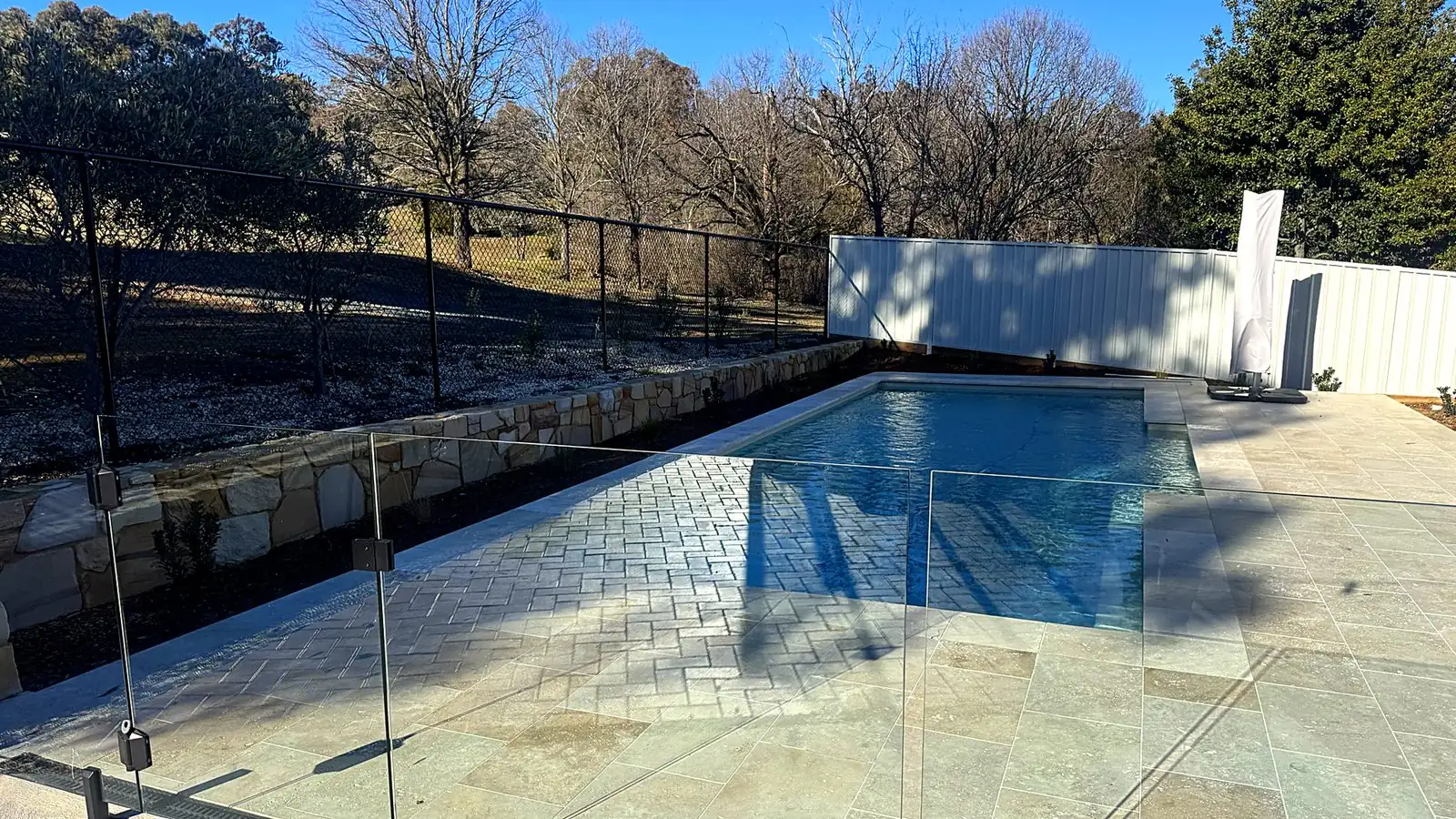
Inspected to AS 1926.1–2012 · Canberra and surrounding NSW
Four years sounds like plenty. It goes quickly.
The ACT reforms started on 1 May 2024 and gave owners a four-year window. Every pool built, altered or installed before 1 May 2013 has to hold a compliance certificate by 1 May 2028, lodged with the Government within 30 days of issue.
Most barriers need at least one thing changed. A latch, a rail, a gap under a gate, a garden bed sitting against the fence. That takes time to organise. Leave it until 2027 and you’ll be competing with every other pool owner in Canberra for inspectors and fencing contractors at the same time.
There’s a quiet upside to going early. A certificate issued during the transition period runs through to 30 April 2032. Leave it too late and you get five years from whenever it’s issued, which can work out shorter.
- 30cmWater depth at which a pool becomes regulated
- 1 MAY 2028Deadline for pools built before 1 May 2013
- 30 DAYSTime to lodge a certificate after it is issued
- 30 APR 2032Expiry of certificates issued during the transition period

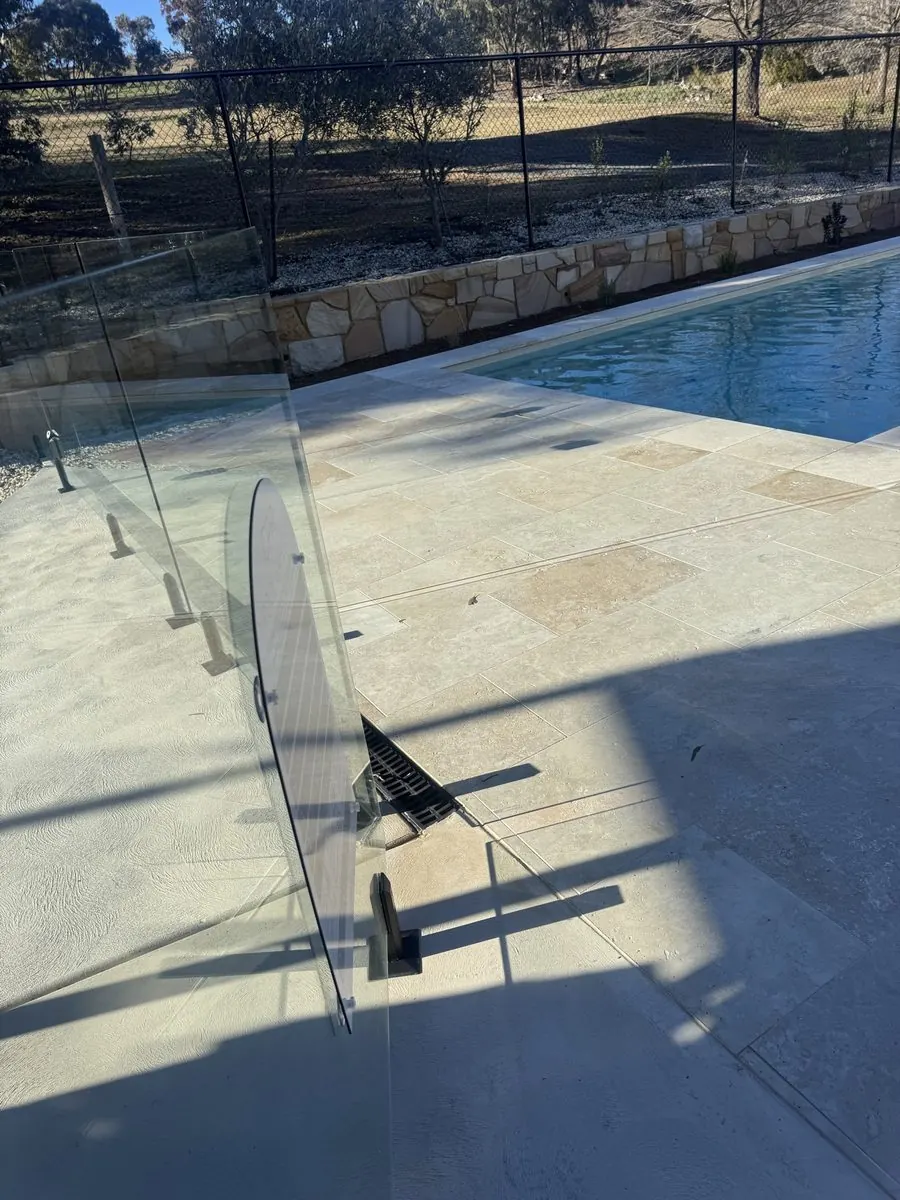
Unapproved pools
No certificate of occupancy? We manage the whole thing.
Maybe the builder walked away. Maybe the paperwork stalled, or the ACT Government has been in touch. Whatever the reason, a pool with no certificate of occupancy is unapproved, and that will usually stop you selling the property.
I run the whole retrospective approval as one managed package. Building certifier, structural engineering, electrical sign-off, a surveyor if the siting calls for it, plans drawn up, barrier brought to standard, and the submission taken through to the ACT Government. You don’t chase a single trade or fill in a single form.
What we measure
Most of this comes down to three numbers
Three numbers decide most inspections. The barrier has to stand 1200mm above finished ground level. The gap underneath can’t exceed 100mm. And a 900mm arc struck from the top of the barrier has to be clear of anything a child could climb.
That last one catches more good fences than the other two combined, usually because of something sitting beside them rather than the fence itself.
What I check on site
A barrier inspection is a measurement job. These are the items I work through on site, in the order the standard sets them out.
Barriers & boundary fences
- Height of 1200mm minimum above finished ground level
- Ground clearance no greater than 100mm
- Vertical gaps no greater than 100mm
- 1800mm boundary fences and their extended zones
- Horizontal members and climbable rails
- Perforated sheet, mesh and glass panels
- Stepped and sloping ground conditions
- Strength, rigidity and general condition
Non-climbable zones
- 900mm arc measured from the top of the barrier
- 300mm zone on the pool side
- 500mm clear width outside the barrier
- Handholds and footholds within the zone
- Climbable projections and indentations
- Where barriers of different heights intersect
- Retaining walls above and below pool level
- Balconies projecting into a zone
Gates, doors & windows
- Gates swinging away from the pool area
- Self-closing operation from any open position
- Self-latching, and staying latched when lifted
- Latch release height and position
- Hinges, shielding and openings over 10mm
- Doors from a house into the pool area
- Window restrictors where a sill is below 1800mm
- Pet doors and other unrestricted openings
Every item gets written up with the clause it comes from and a plain description of what would fix it. You can hand the report straight to a fencing contractor without translating anything.
What this looks like in a real backyard
The standard is written in millimetres. Here’s what those millimetres actually mean in a Canberra backyard.
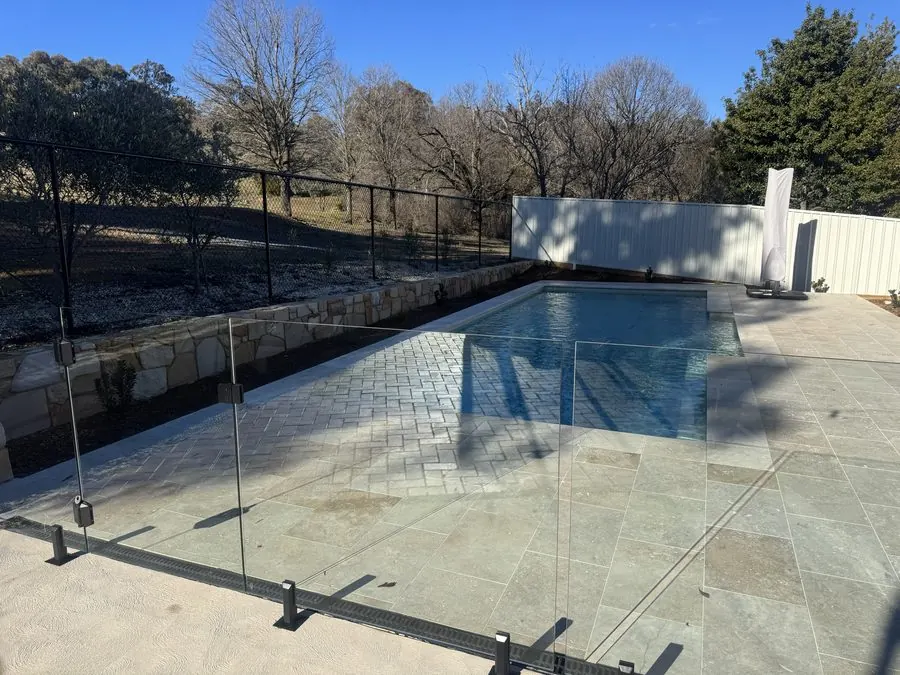
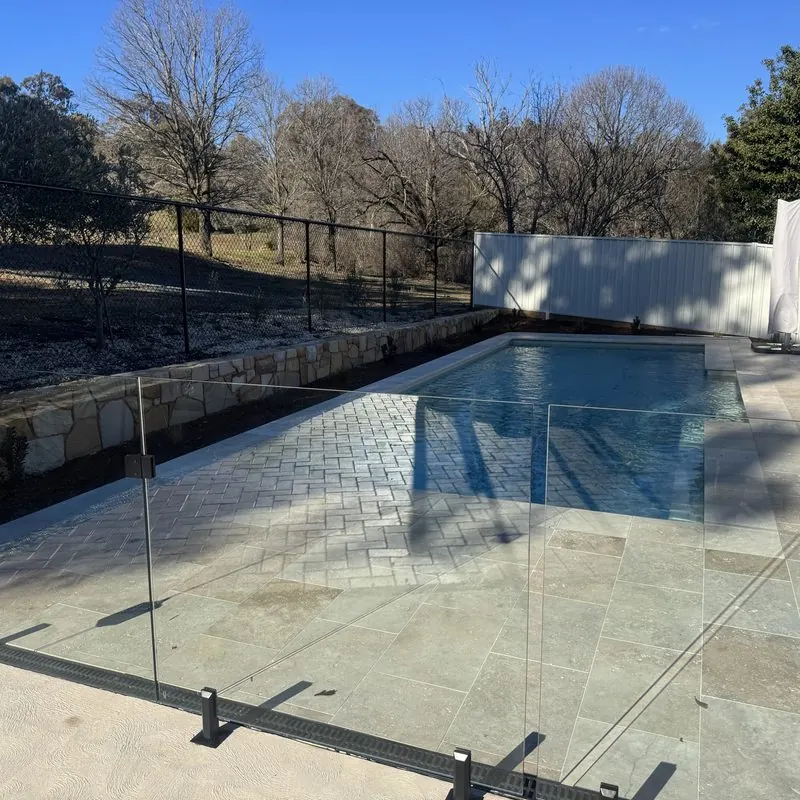
Glass barrier, boundary fence, retaining wall
Frameless glass, a Colorbond boundary and a raised garden wall, all meeting in one corner. Each is assessed differently, and the corners where they meet are where the extended zones bite.
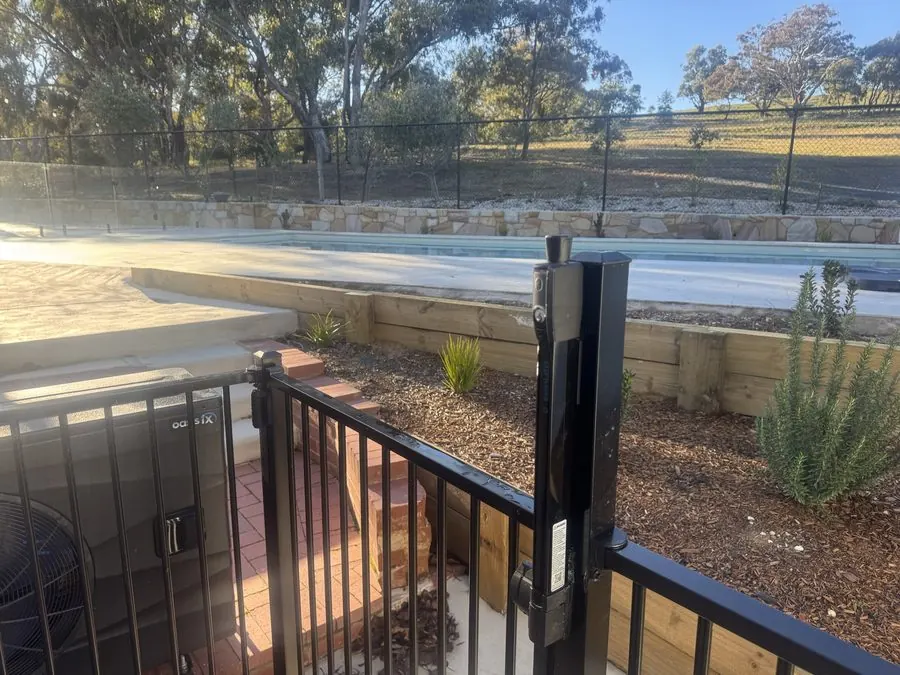
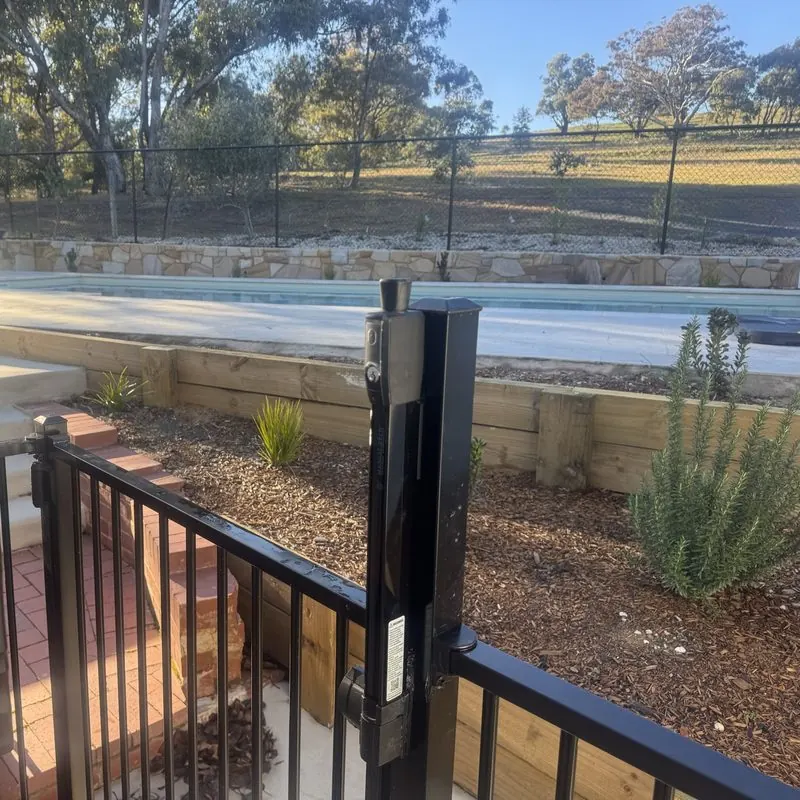
Gate latch and self-closing hinges
I release this gate from three positions: barely ajar, halfway, wide open. Then I lift it and push down on it. A gate that has dropped 5mm on its hinges will often pop open when lifted.

Boundary fence as part of the barrier
A boundary fence doing barrier duty needs 1800mm measured from the pool side. Ground levels on both sides decide whether it actually makes that height, which surprises a lot of owners.
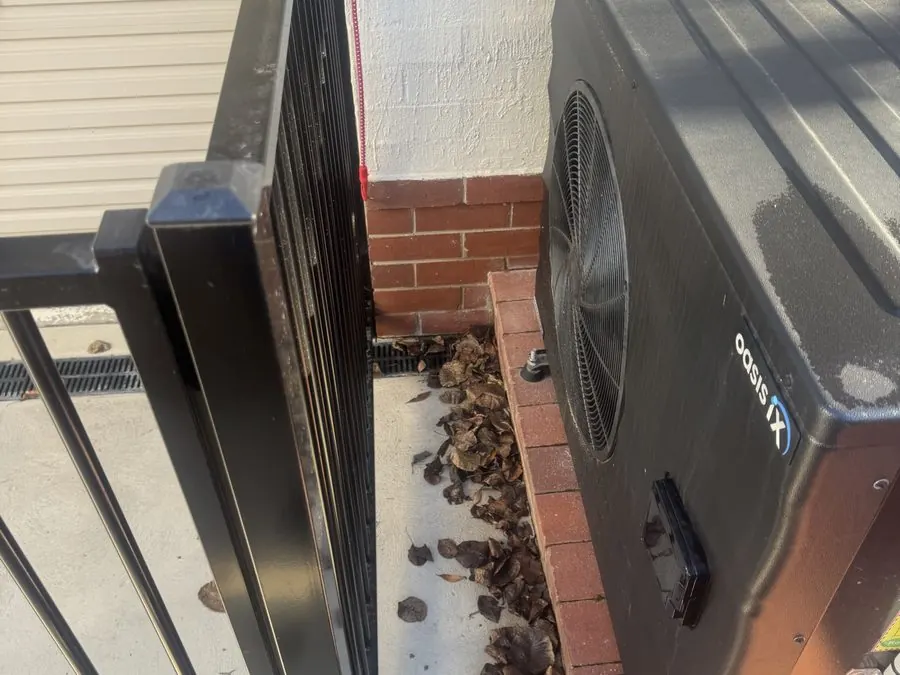
Fixed plant hard against the barrier
Heat pumps and filters end up against the fence because that’s where the plumbing runs. Moving one is a plumbing and electrical job. Worth finding out about now, not three weeks before settlement.
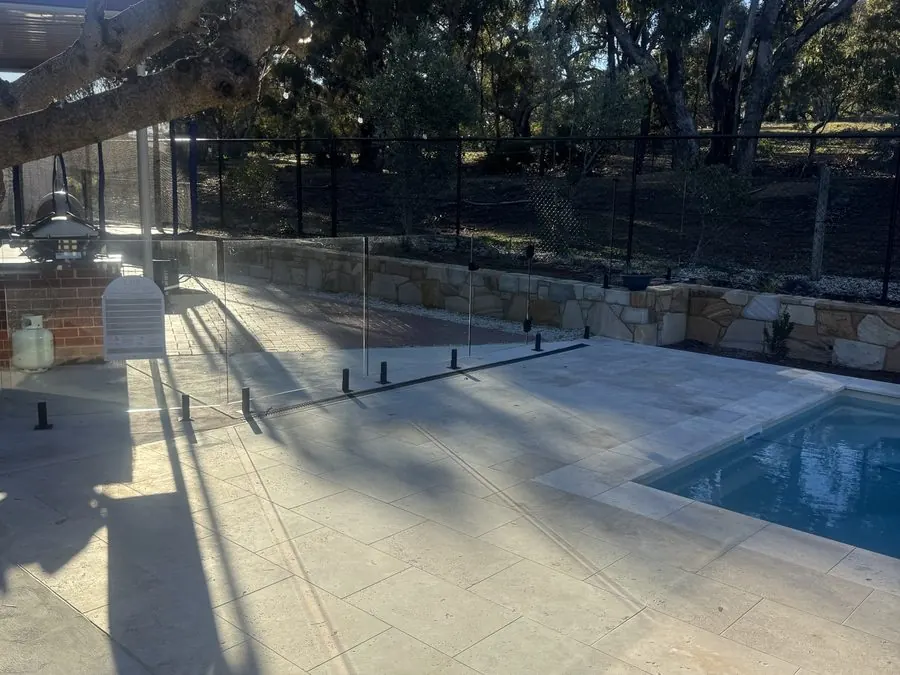
Trees over the barrier line
Branch structure near a barrier can absolutely be climbable, and trees generate more discussion on site than anything else. Worth talking through before anyone rings an arborist.

Resuscitation signage
A CPR chart mounted where it can actually be read from the pool area. Mandatory in NSW, sensible everywhere, and the cheapest thing on any list I hand over.
Over the border in NSW
NSW runs its own scheme under the Swimming Pools Act 1992. Pools have to be on the state register, and you generally can’t sell or lease a property with a pool without a certificate of compliance.
If you own on the NSW side, or you manage properties either side of the border, you can use one inspector for both. Same fixed fee, same turnaround, and a report citing the right legislation for the right property.
What people ask me
Do I actually need a compliance certificate?
If your pool can hold water deeper than 300mm, is on a property with a residence, and was built, altered or installed before 1 May 2013, then yes. You need a compliance certificate before 1 May 2028, and it has to be lodged with the ACT Government within 30 days of being issued.
Pools built on or after 1 May 2013 don’t have to be certified by that date, but you will need a certificate the next time you sell or lease. A certificate of occupancy covering the pool and its barrier can be used instead if it’s less than five years old.
What happens if my barrier fails the inspection?
Nothing dramatic. Most older Canberra barriers need something done, so this is the normal outcome rather than a disaster. You get a written notice setting out exactly what has to change and how long you have to do it. You fix the items, I come back and reinspect, and the certificate follows. A reinspection is $200 plus the $79 lodgement fee. Nothing starts from scratch.
How long does an inspection take?
Between 45 and 90 minutes for a typical suburban pool. Longer if there are multiple barriers, retaining walls or a second gate. I walk the whole barrier with you, measure everything, and tell you the result before I leave. The written report follows within 24 hours.
Is a disclosure statement enough if I’m selling now?
Until 30 April 2028 it can be, and it is often the faster path to settlement. A disclosure statement records the age of the pool and its status against the safety standard, along with the Minister’s guidance material, so you meet your obligation to the buyer or tenant. What it doesn’t do is certify the pool, the certificate is still required before 1 May 2028.
What does the 900mm non-climbable zone mean in practice?
Measured as an arc from the top of the barrier on the outside, nothing within 900mm can give a child a handhold or a foothold. In real backyards that usually means shifting the pot plants, the pump housing, the woodpile, the trampoline or the wheelie bin off the fence line. Sometimes it means taking off a horizontal rail or cutting back a garden bed edge. It’s the single most common reason a perfectly good-looking fence doesn’t pass.
Do you cover pools just over the border in NSW?
Yes. Queanbeyan, Jerrabomberra, Googong, Bungendore, Murrumbateman, Yass and the surrounding district. NSW runs under different legislation, the Swimming Pools Act 1992, with its own register and its own certificate. I handle that process too.
What is the $79 lodgement fee?
It’s the ACT Government’s administration fee for lodging a certificate, not my charge. Every compliance certificate has to be lodged with the Government within 30 days of being issued, and the fee is payable on lodgement.
I quote it inside the total rather than adding it at the end, so a compliance status certificate is $479 all inclusive and a reinspection is $279 all inclusive. A disclosure statement isn’t lodged, so no fee applies and it stays at $400.
How much notice do you need?
Usually a few days, and I keep slots free for settlement deadlines. If you have a date you have to hit, say so when you ring and I’ll work backwards from it.
Not sure which one you need?
Two minutes on the phone is usually enough to work out whether you need a certificate now, a disclosure statement for a settlement, or nothing at all yet. The advice is free.
Call 0456 676 683 Read the full FAQGet this off your list
Fixed fee, a clear result on the day, paperwork handled. If you’re not sure which document you need, ring me and we’ll work it out. No charge for that.
Get in touch
I answer enquiries the same business day. Got a settlement or a tenant moving in? Tell me the date and I’ll work backwards from it.
- PHONE0456 676 683
- EMAILhello@poolcomplianceact.com.au
- HOURSMonday to Saturday, 7am–6pm
- AREAAll ACT suburbs, Queanbeyan, Jerrabomberra, Googong, Bungendore, Murrumbateman, Yass
